2020 官网升级中!现在您访问官网的浏览器设备分辨率宽度低于1280px请使用高分辨率宽度访问。

Latest News
Champagne Welcomes New Legal Grapes, Signaling How the Wine Industry Will Confront Climate Change
In Champagne,a region that has kept its system of seven authorized grape varieties unchanged for over 88 years,both Voltis and Chardonnay Rosé have now been admitted. The addition of Voltis, a disease-resistant PIWI hybrid, is proof that climate change has made it impossible for the wine industry to stand idle. Traditional houses are now cultivating new ways of thinking and new paths forward. WINWSA has turned to its 2025 List of 50 recipients, looking to their real-world practices for answers to wine’s future.

As temperatures rise, warmer wine regions struggle to maintain balance, while cooler northern zones may finally achieve reliable ripening. Bordeaux, up 1.5°C since the 1950s, now harvests two weeks early, pushing overripe flavors and challenging old methods. Meanwhile, cooler regions gain ground. Take the United Kingdom, for example, which was once considered too cold for viticulture. Today, British sparkling wines are winning numerous awards and are even hailed as being on par with Champagne.
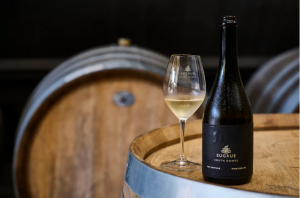
At the 2025 IWSC, the top-scoring sparkling wine went to Sugrue South Downs’ “The Trouble With Dreams” 2009 Brut (97 points)—from England.
Climate volatility is hammering traditional regions. The OIV’s 2023 report tied lower global output to spring frosts, heavy rain, drought, and mildew pressure. South Africa’s vineyard area has shrunk for eight years straight due to severe drought. Meanwhile, heavy rains push early ripening, jack up sugar, slash acidity, and unbalance flavor.
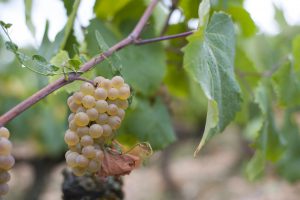
Growers are now planting alternative varieties better suited to conditions that defeat their usual grapes.In Austria, for example, producers are eyeing Furmint—a late-ripening, heat-tolerant Hungarian variety—to replace Grüner Veltliner, which is struggling with drought.
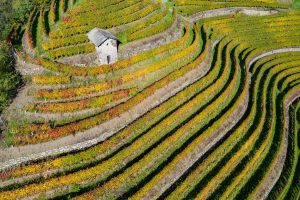
Climate also forces growers to find ways to preserve flavor and secure harvests. In Italy’s Valtellina, home to “heroic” mountain viticulture, producers are restoring terraces and deploying drones for crop protection. In Australia, shade nets shield vines from heatwaves. But these measures demand real investment. Soil sensors, satellite imagery, and weather stations now feed real-time data to guide irrigation, harvest timing, and protection. Still, technology only goes so far. As warming continues, long-term solutions remain a work in progress.
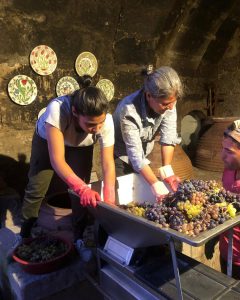
Gizem Billur Duyar
Kerasus Wines |Turkey
WINWSA 2025 Viticulturist of the Year
Turkey gave wine its origins, but its modern industry is only decades old. Gizem broke that pattern. She founded Kerasus Wines, created non-traditional wine tourism routes, and partnered with local villages to revive forgotten native varieties and winemaking practices.
Kerasus doesn’t own or lease vineyards. Instead, it seeks out grapevines that grow alongside trees—an ancient system where vines climb without harming the host. These grapes live at forest edges and in local memory. Gizem helps villagers harvest from their own gardens, then ferments in clay amphorae made by Cappadocian artisans. The result puts small, local, often marginalized Black Sea varieties into real market expression—a language made of ecology, community, and tradition.
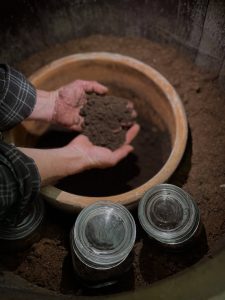
Anna Martí Pitart :
Ca N’Estruc estate |Spain
WINWSA List of 50
After taking over her family’s winery,a property dating to 1574,Anna carried out a quiet but thorough transformation.With her father, she shifted the business from bulk wine to estate bottling, replanting indigenous Mediterranean varieties. Ca N’Estruc’s contiguous 22 hectares have been organic since 2012 and are moving toward biodynamics. At the same time, she launched a smaller BI line: native yeasts, no fining, no filtration—low intervention that lets land, grape, and time drive the flavor. She gave a traditional estate new energy and a fresh voice.
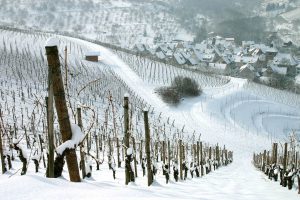
Marine Descombe:
Vins Descombe |France
WINWSA List of 50
Marine Descombe is a force in French wine. As the fifth generation of a century‑old Beaujolais winemaking family, she adheres to High Environmental Value (HVE) certification and built an artificial reservoir to moderate the local climate and guard against severe northern frosts. In the cellar, her methods are meticulous: hand harvest, on‑table sorting, and 40% destemming. That level of care drives fruit integrity, ripeness selection, and final texture.
The cocktail trends taking shape in 2026 are worth documenting. From the menus of the world’s leading bars, it is clear that savory cocktails and snack-like garnishes are turning the drink into something more culinary, more immersive, and more shareable. They are also helping turn bars into spaces where ideas collide and pleasure is consciously staged.
When a cocktail tastes like a dish, reads like a menu, and is remembered like a journey through a city’s flavors, drinking becomes the kind of maximalist sensory experience contemporary consumers increasingly crave. This may not be the path every bar should follow. But it may well be one of the clearest ways premium cocktails can capture the imagination of the next generation in the years ahead.
Shen Pao, 309 Hankou Road, SHANGHAI 200001, CHINA
+86 (021)63600188
winwsa@indigoasie.com